Quantum
Transportation
Quantum Transportation is focused on advancing quantum error correction with technology built to support the next generation of quantum hardware.
Our approach provides a practical path for improving noise tolerance and unlocking scalable quantum computation for companies and labs working at the frontier of the field.
Partner With UsThe Problems
Noisy Qubits Limit
Quantum Computing
Noisy Qubits Limit Quantum Computing Qubits are inherently noisy. Without quantum error correction QEC, large-scale quantum computation is impossible.
Why Efficient
Decoding Matters
Efficient QEC requires both a well-designed code and a powerful decoder, the algorithm that interprets erroneous data to identify and correct errors. Decoding remains a key bottleneck. Addressing it would significantly improve noise tolerance, enhancing the performance and scalability of today’s quantum hardware. For hardware manufacturers, this is a game-changer.
Historical Focus on the
Surface Code
Since 1998, when QEC was proven to be a possible reality, until 2020, the focus of the hardware companies was the Surface code SC, a specific QEC code. This code is relatively easy to implement and analyze for hardwares but it is very wasteful, it needs several physical qubits to encode one unit of meaningful information.
The Need for Something
Beyond the Surface Code
A useful, efficient fault tolerant quantum computer will not be based on the Surface code. And justifiably so, the landscape now is rapidly changing.
Our Solution
Patented Machine Learning Based Universal Decoder
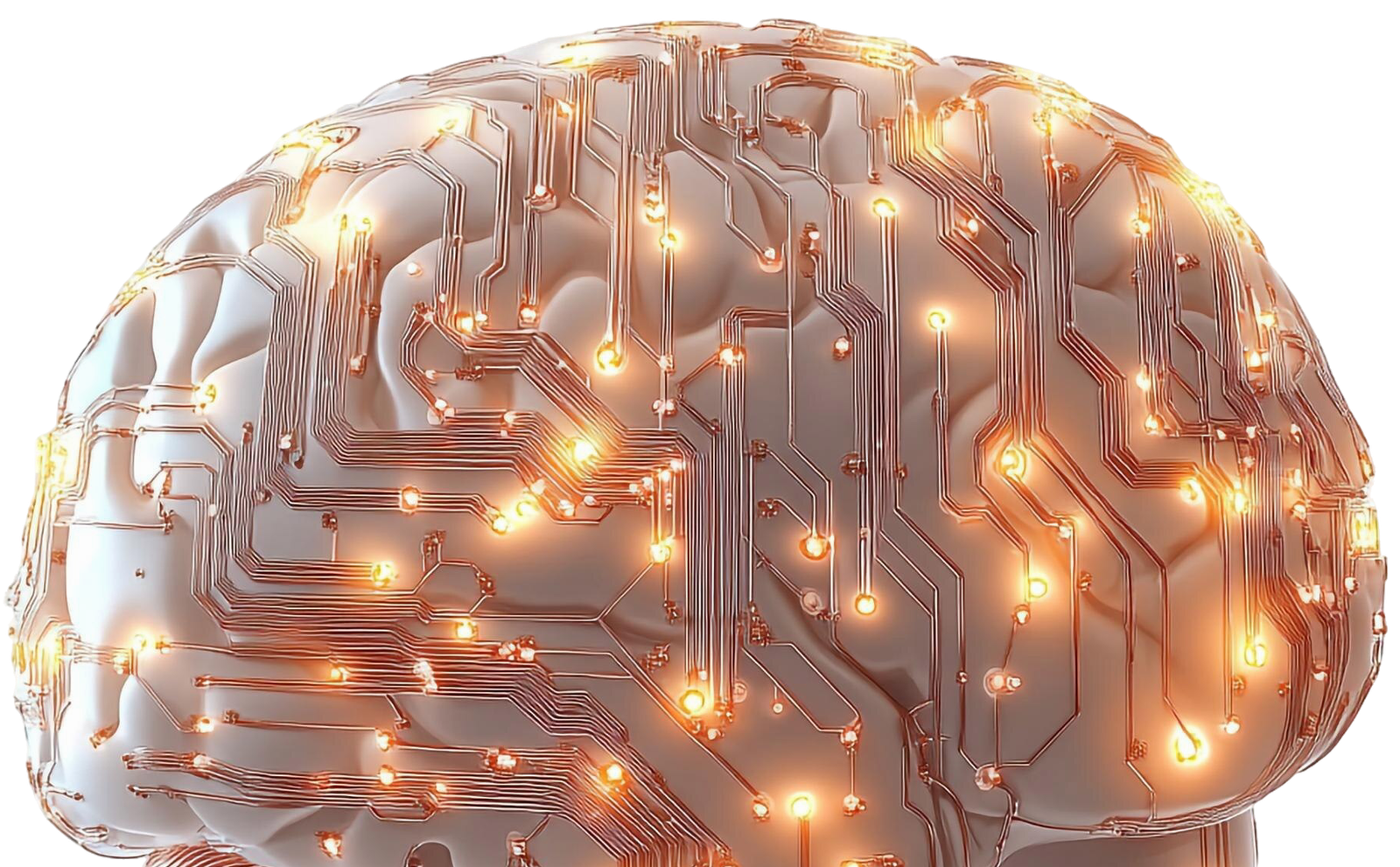
Unlike traditional decoders, the patented decoder (PD) is a machine learning based decoder that estimates and refines errors using advanced neural network techniques.
Code-Agnostic
The decoder generalizes naturally to any stabilizer or CSS code, including surface, color, bicycle, product codes, and beyond.
Noise-Aware
It adapts to the actual noise model, training directly on realistic channel data to optimize performance.

Scalable
Once trained, the decoder can be applied across different hardware platforms and code sizes, making it uniquely scalable and adaptable.
Essential for Future Hardware
All of these features make PD essential for improving noise tolerance and enabling the next generation of quantum hardware.

Our IP was developed and registered by Prof. Lior Wolf. A faculty member at the School of Computer Science at Tel Aviv University. Previously a postdoc working with Prof. Poggio at CBCL, MIT.
Partner With UsThe Product